


Seamless Solar Roof Tiles: Modern Solutions for Any Roof Type
2026-10-30 08:00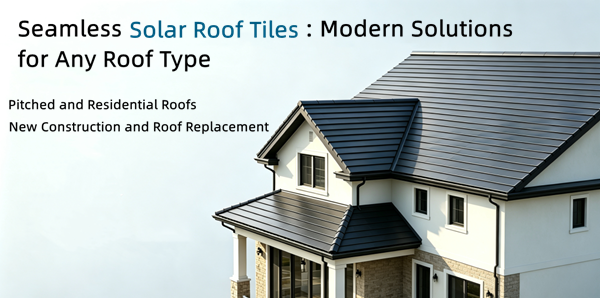
As solar energy becomes increasingly integrated into modern buildings, roofing is evolving from a passive building component into an active energy-generating surface. Solar roof tiles combine photovoltaic technology with roofing materials, offering homeowners, architects, and developers a more integrated alternative to conventional rooftop solar panels.
Unlike traditional panels mounted above an existing roof, solar tiles are designed to become part of the roof itself. This creates a cleaner appearance while making use of existing roof space for renewable energy generation.
Can Solar Roof Tiles Work With Different Roof Types?
One of the most common questions from homeowners and construction professionals is whether solar roof tiles can be used on different types of roofs. There is no single system suitable for every building, but modern solar roofing solutions can be designed for a variety of suitable roof structures.
Pitched and Residential Roofs
Pitched roofs are particularly suitable for integrated solar roofing because their slope allows rainwater to drain naturally while providing a useful surface for solar generation. For homeowners looking for solar roof tiles for homes, the key factors are usually roof pitch, orientation, structural capacity, shading, and the installation method required by the selected system.
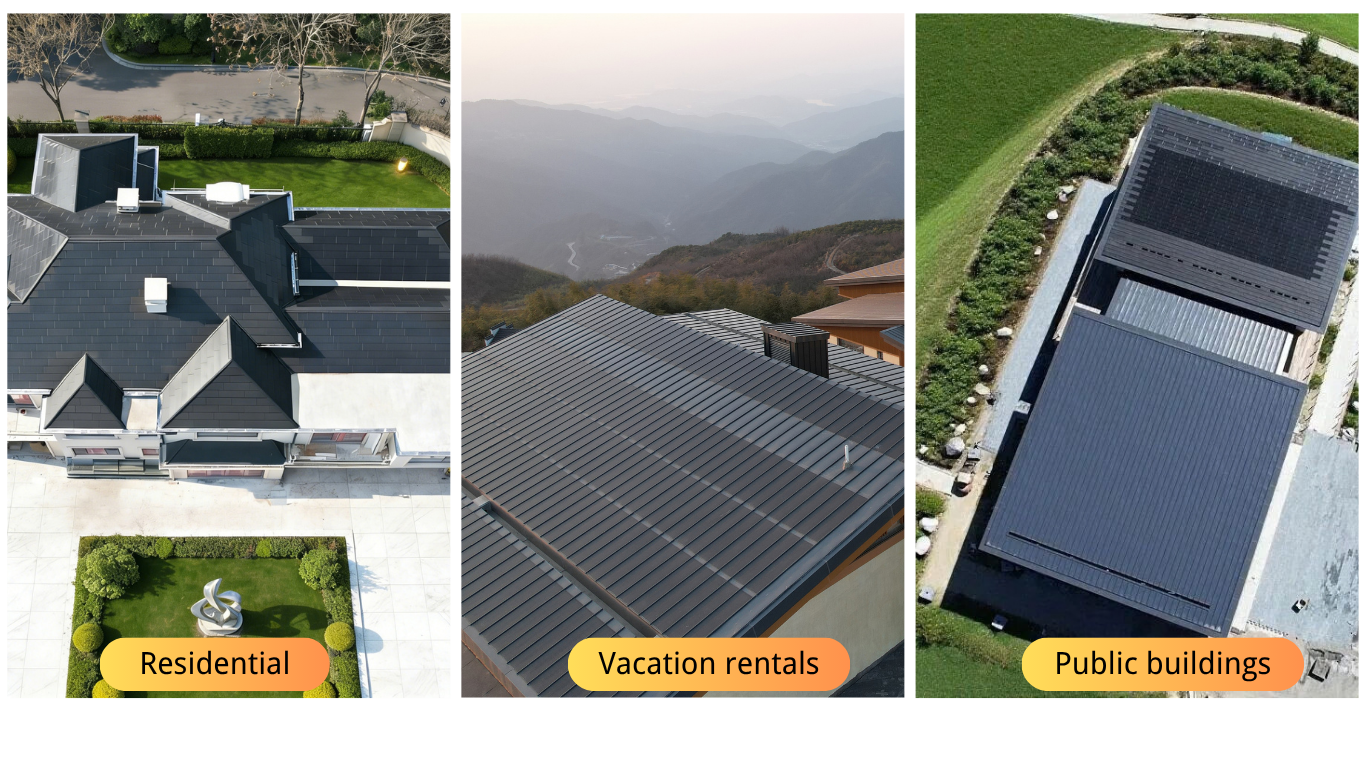
For modern villas and custom homes, integrated solar roof tiles can also provide a more consistent architectural appearance. Instead of placing large panels above the roof, the photovoltaic elements become part of the overall roof design.
New Construction and Roof Replacement
New construction offers an ideal opportunity to plan solar roofing from the beginning. Architects and builders can consider the roof structure, waterproofing, electrical system, and photovoltaic layout together, making solar roofing solutions for new homes easier to integrate into the overall building design.
Solar tiles can also be considered for roof replacement projects, although the existing structure should be evaluated first. Roof condition, load capacity, pitch, fixing requirements, and local building regulations all affect whether solar roof tiles for roof replacement are suitable.
Solar Roof Tiles vs. Traditional Solar Panels
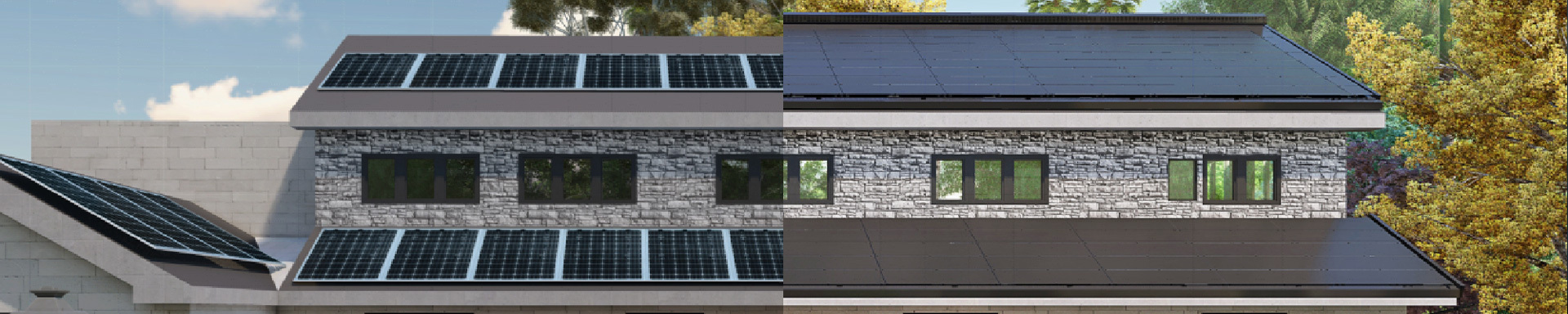
Traditional solar panels remain a practical choice for many existing roofs, particularly when the roof is structurally sound and the main objective is cost-effective solar generation. However, the comparison between solar roof tiles vs solar panels is not simply about photovoltaic efficiency.
The two solutions differ mainly in how they are integrated with the building. Conventional panels are installed above the roof using mounting structures, while solar roof tiles are designed to combine roofing and power generation in a more integrated system.
For new homes, villas, and projects where architectural appearance is important, solar roof tiles can offer a cleaner roofline and reduce the visual impact of the photovoltaic system. For existing buildings where the roof does not need replacement, conventional panels may remain the more economical option.
The right choice therefore depends on the building structure, project budget, energy requirements, and installation conditions.
What Makes a Solar Roof System Truly Seamless?
A seamless solar roof is not simply about appearance. The entire roofing and electrical system needs to work together.
Proper integration between solar tiles and surrounding roof materials is essential, particularly around roof edges, ridges, valleys, flashing, and drainage areas. Waterproofing should also be considered during both product design and installation to ensure that the roof continues to provide reliable weather protection.
Electrical compatibility is equally important. Buyers should check the requirements for connectors, wiring, inverters, and other system components before installation.
For integrated solar roof tiles, structural compatibility is another key consideration. Roof load capacity, pitch, fixing methods, local weather conditions, and applicable building codes should all be reviewed before a project begins.
Why Are Solar Roof Tiles Gaining Attention?
The growing interest in solar roof tiles reflects a broader change in the renewable energy and construction industries. Solar power is increasingly being considered as part of building design rather than something added after construction.
By using the roof as both a protective surface and an energy-generating area, solar tiles can support the development of more energy-efficient buildings without requiring additional land.
They are particularly relevant to new residential projects, villas, custom homes, and other buildings where energy performance and architectural appearance need to work together.
How to Choose the Right Solar Roof Tiles
When selecting a system, buyers should look beyond the rated power of the photovoltaic module. Roof compatibility, power output, waterproofing, weather resistance, electrical connections, installation requirements, warranty, and local certification should all be considered.
For international projects, local building codes and grid-connection requirements are especially important. Working with an experienced solar roof tile manufacturer can also help buyers understand product specifications and installation requirements before placing an order.
A More Integrated Approach to Solar Roofing
Seamless solar roof tiles represent a shift toward combining renewable energy with modern roof design. They are not necessarily a replacement for traditional solar panels in every application, but they provide an attractive option when a project requires both a new roof and an integrated photovoltaic system.
At SGBSOLAR, we provide solar roofing solutions for residential and architectural applications. If you are sourcing solar roof tiles from a manufacturer or planning a new solar roofing project, contact SGBSOLAR to discuss suitable products and project requirements.